ENERGY STAR® version 7.0: Your quick guide to what’s changed
ENERGY STAR® version 7.0 is out. What does this mean in your climate zone? What products will meet the new requirements? What should you know about the Inflation Reduction Act of 2022 tax credit? We’re here to answer these pressing questions.
The big headline is that U-Factor requirements are much more stringent under ENERGY STAR® version 7.0. In the Northern climate zone, triple-pane glass is now the best solution for meeting requirements. We’ll share the highlights related to version 7.0 and give you some tips about specifying product for your climate zone.
What’s changed with ENERGY STAR 7.0?
Here are a few of the most notable changes that are included in this update:
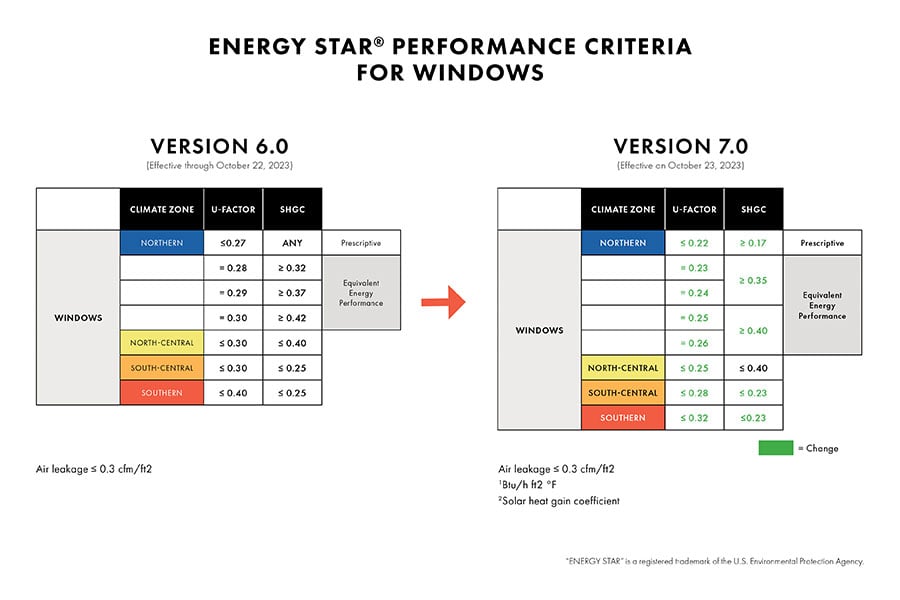
- In all climate zones, the criteria for meeting ENERGY STAR requirements have changed with very stringent changes in the Northern and North-Central climate zones — see tables below to understand the changes in each climate zone.
- Version 7.0 brings the most stringent criteria ever with a Northern zone U-Factor of ≤ 0.22 for windows and ≤ 0.26 for patio doors.
- Also in the Northern zone, for the first time, there is a minimum Solar Heat Gain Coefficient (SHGC) requirement for windows of ≥ 0.17. ENERGY STAR continues to allow equivalent energy options for windows in the Northern climate zone where a higher U-Factor can be used with a minimum SHGC. See tables below for details on requirements for prescriptive and equivalent options.
- In the North-Central climate zone, the U-Factor has also changed significantly from ≤ 0.30 to ≤ 0.25.
- In the South-Central climate zone, there has been a more moderate change in window U-Factor from ≤ 0.30 to ≤ 0.28.
- In the Southern climate zone, the window U-Factor requirement has changed significantly from ≤ 0.40 to ≤ 0.32.
- The SHGC requirement for windows in the South-Central and Southern climate zones has been lowered from ≤ 0.25 to ≤ 0.23.
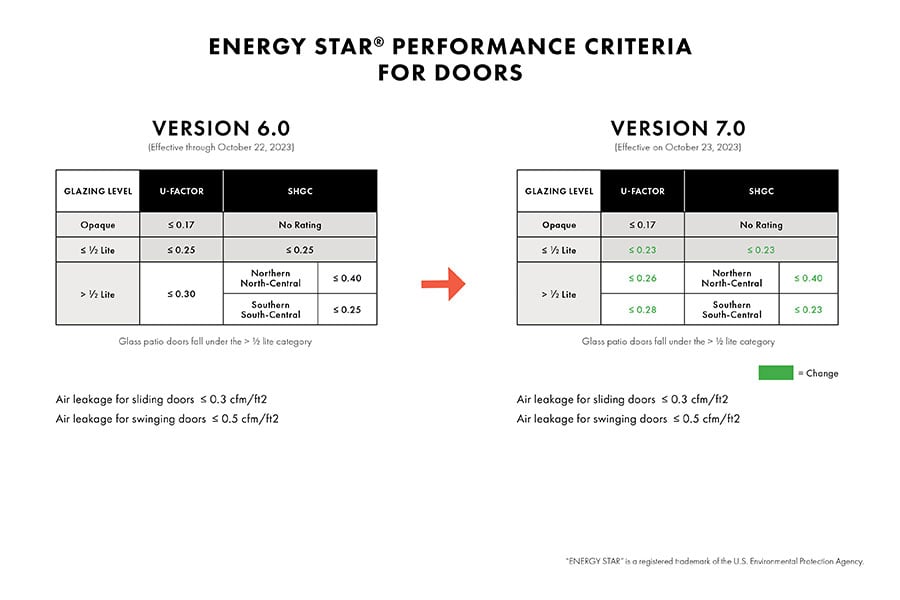
- For doors, particularly the > ½ lite category that glass patio doors fall under, the U-Factor criteria has changed from ≤ 0.30 to ≤ 0.26 in the Northern and North-Central climate zones.
- The climate zone map has also changed most notably in the West, see California and Nevada. This has resulted in changes to all four of the ENERGY STAR climate zones, so pay close attention when understanding the right climate zone in your area.
Remember, ENERGY STAR is different from energy code. While compliance with local energy code is required, compliance with ENERGY STAR is voluntary. Using ENERGY STAR-certified products for your climate zone can help improve the energy efficiency of a building and lower heating and cooling costs. ENERGY STAR-certified products can also help qualify homeowners for tax credits. ENERGY STAR performance criteria is also considered a leading indicator of where future energy codes are heading.
Need a quick review of performance measures?
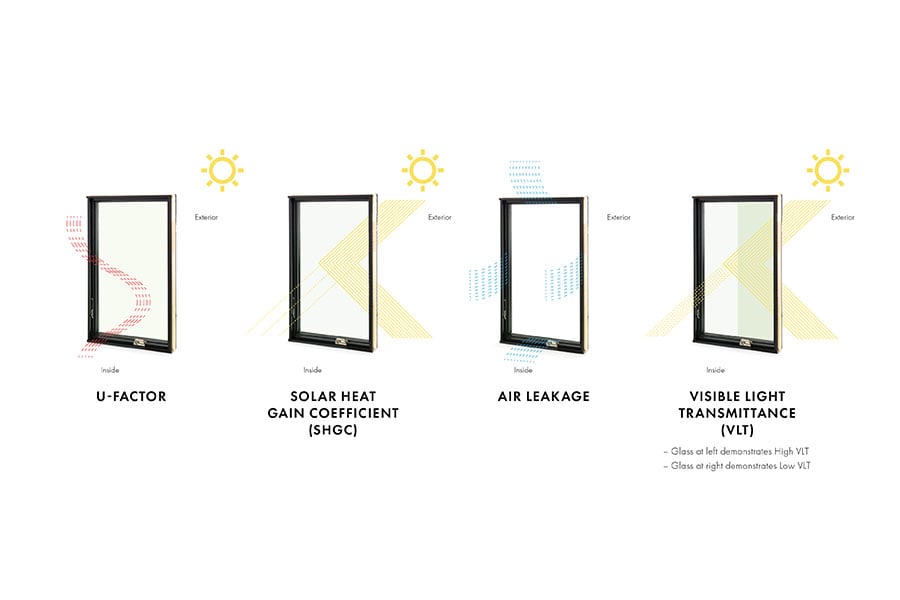
If you’re trying to remember what U-Factor and SHGC mean, here’s what to know about these measures as they apply to windows and doors:
- U-Factor: This is a measure of insulation, or how well a window or door keeps energy (heat) from escaping. The less heat loss through the window or door, the more energy efficient the window or door. U-Factors are measured in British Thermal Units (BTUs) per hour square foot degree Fahrenheit and abbreviated as BTU/hr·ft²·°F. They can range from 1.2 (worst performing) to 0.20 or lower (best performing). Lower U-Factors can often improve comfort and lower heating costs.
- SHGC: This is a measure of how much heat is transmitted through a window or door from the sun. It’s measured on a scale from 0 to 1 and expressed as a decimal point. The lower the number, the less heat gain through the window or door. Less heat gain can help improve comfort and lower cooling costs.
- Air leakage: This is how much air leaks through the window or door assembly itself. It’s not a measure of air leaking around the unit due to sealing deficiencies that might occur during installation. Air leakage is measured in cubic feet per minute per square foot of the window or door’s area. A lower number means less air leakage through the window or door.
- Visible Light Transmittance (VLT): This is a measure of how much sunlight passes through a window or door. It’s measured on a scale from 0 to 1 with higher numbers indicating that more light comes through the window or door. More layers of glass and different Low-E glass coatings — as well as the width of the window sash and frame, or door panel and frame — can lower the VLT of a window or door.
Note, U-Factor and SHGC are general measures of thermal and solar performance. U-Factor (heat loss) as well as R-Value (resistance to heat loss) are also used to measure things like wall and roof assemblies. The definitions above are meant to help you understand what these measures mean when it comes to windows and doors.
Beware of center of glass only information when you’re evaluating a window or door unit’s U-Factor or SHGC, as that will only provide information on the glass, not the entire window or door, which includes center of glass, edge of glass, sash or panel, and frame. Make sure you’re looking at National Fenestration Rating Council (NFRC) certified ratings, which assess whole unit performance, not just the center of glass performance.
Your Andersen dealer can give you NFRC-certified ratings when you order windows and doors.
Northern zone: Two options to compliance
One unique aspect of meeting ENERGY STAR criteria for windows in the Northern zone is that there are two options to qualify: a primary prescriptive path or an equivalent energy performance path. Again, only the Northern climate zone allows two options and only for windows. Patio doors (> ½ lite category) in the Northern zone must follow the prescriptive path.
The prescriptive path means the window product must meet a U-Factor value that’s ≤ 0.22 and an SHGC value that’s ≥ 0.17. The second path, the equivalent energy performance path, allows for a higher U-Factor if there’s a higher SHGC to go along with it — see the window criteria table above for exact values.
How to specify product certified to ENERGY STAR 7.0 criteria
There are many factors that go into specifying the right product, but here are a few tips for choosing a product that is certified to ENERGY STAR version 7.0 criteria:
Northern zone: Remember, there are two paths to compliance, so there’s some flexibility to choose a product with higher U-Factor if it’s balanced by SHGC. Generally though, the simplest path to compliance will be with a triple-pane product.
- All windows in the A-Series product line can be ordered with triple-pane glass, so this product line will offer the most options.
- The 400 Series offers triple-pane windows in the Northeast and the option for a factory-applied energy performance panel on the Tilt-Wash Double-Hung Window, which can meet requirements when combined with the right Low-E coatings.
- For patio doors, triple-pane glass is available with the A-Series, 400 Series, and 200 Series product lines.
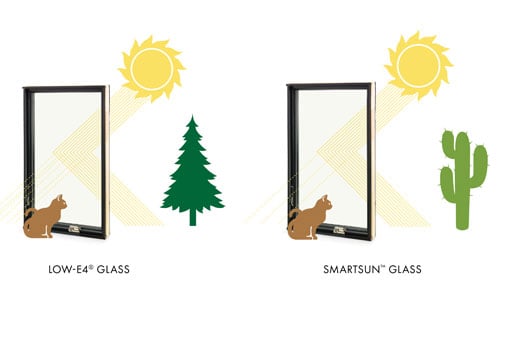
North-Central, South-Central, and Southern climate zones: Generally, requirements for these zones can still be met with dual-pane window and door product coated with SmartSun™ glass and HeatLock® technology. This combination of coatings insulates while reducing SHGC.
Dual-pane windows with Low-E coatings
In North-Central, South-Central, and Southern climate zones, there are more options across a variety of product lines for meeting requirements with dual-pane glass and coatings. Limited dual-pane glass options will be able to meet requirements in the Northern climate zone.
- Northern climate zone: Although there are more limited dual-pane window products that will meet requirements for this zone, in some cases adding PassiveSun® glass with HeatLock® technology will provide the insulation needed while also allowing for higher SHGC. This combination of coatings has recently been expanded and is now available across all our window and patio door product lines. In addition, the 400 Series Tilt-Wash Double-Hung Window can meet requirements with the addition of a factory-applied performance panel and the right combination of glass coatings.
- North-Central, South-Central, and Southern climate zones: In many cases, SmartSun glass with HeatLock technology will help a dual-pane window meet requirements.
Triple-pane windows with Low-E coatings
Through our A-Series, E-Series, and 400 Series product lines, there are more window products available that will meet requirements for all climate zones. In addition, there's freedom to choose more options — for example, types of windows, the addition of grilles, etc. — when starting with a higher-performing, triple-pane product.
- Northern and North-Central climate zones: A variety of A-Series, E-Series and 400 Series windows with triple-pane glass will meet requirements with Low-E4® Enhanced glass, SmartSun™ Enhanced glass, or LowE4® Enhanced HeatLock technology.
- South-Central and Southern climate zones: Similarly, a variety of A-Series and E-Series windows with triple-pane glass will meet requirements with the addition of SmartSun Enhanced or SmartSun Enhanced with HeatLock technology.
Dual-pane patio doors with Low-E coatings
There are more options available with gliding patio doors, including several options that work in all four climate zones. In the South-Central and Southern climate zones, there are a variety of options available across a variety of product lines. Options are a bit more limited for the Northern and North-Central climate zones.
- All climate zones: Four gliding patio doors and one hinged patio door can meet requirements in all four climate zones. The 200 Series Narroline® Gliding Door, the 100 Series Gliding Door, the Perma-Shield Gliding Door, and the A-Series Gliding Door with SmartSun glass and HeatLock technology will lower both U-Factor and SHGC to meet requirements. In addition, the A-Series Hinged (Outswing) Patio Door with the same dual-pane glass construction and same combination of glass coatings (SmartSun glass with HeatLock technology) can meet requirements across all four climate zones.
- Northern and North-Central climate zones: Options include gliding patio doors from the 100 Series and 200 Series product lines with Low-E4® glass and HeatLock technology or SmartSun glass and HeatLock technology. In addition, the 400 Series Tilt-Wash Double-Hung Window can be ordered with a factory-applied performance panel, which will help meet requirements with the right combination of glass coatings.
- South-Central and Southern climate zones: Options include both gliding and hinged patio doors from the 100 Series, 200 Series, 400 Series, and A-Series product lines with SmartSun glass or SmartSun glass with HeatLock technology.
Triple-pane patio doors with Low-E coatings
Through our A-Series, E-Series, and 400 Series product lines, there are options that will meet requirements across all four climate zones. Both gliding and hinged options can meet requirements with the addition of Low-E4 Enhanced glass, SmartSun Enhanced glass, or Low-E4 Enhanced glass with HeatLock technology. Like with windows, starting with a triple-pane product means there’s more freedom to add options without taking away from performance.
E-Series patio doors with triple-pane glass can meet requirements in Southern, South-Central, and North-Central climate zones. In select configurations, Northern zone requirements can be met as well.
One other option to consider is the 200 Series Perma-Shield® Gliding Patio Door, which is now available with triple-pane glass.
As stated above, selecting the right product to meet ENERGY STAR version 7.0 performance criteria is complex. It’s very important to understand how different product features affect a window or door’s energy performance — find out more in the next section.
Other product features that affect energy performance
The features below can change a window or door’s performance in a big way. These product features have an even bigger impact in the Northern climate zone where more stringent U-Factor requirements are making it more challenging to meet ENERGY STAR criteria with dual-pane glass. Here’s what you should keep in mind:
Window type: Casement, awning, and picture windows are typically more energy efficient than double-hung and single-hung windows. Casement and awning windows seal tighter when the wind blows against them, and picture windows are fixed (inoperable) so they’re the most efficient of all window types.
Glass construction: Dual-pane glass has two panes of glass with an argon-gas blend in between for added insulation. Triple-pane glass features one additional pane of glass and one additional argon-gas blend filled air space. The latter also offers three opportunities to include a Low-E coating, versus only two on dual-pane glass.
Glass coatings: The right combination of glass coatings can help a product reflect energy in a way that makes the window more efficient. The right coating or combination of coatings will depend on climate zone, but keep in mind the benefits of PassiveSun glass with HeatLock technology in the Northern zone (insulation plus higher solar gain) and SmartSun glass with HeatLock technology (insulation while reducing solar gain) in the other climate zones.
Grilles: The presence of grilles and even the size of the grilles matters. This is because they can help conduct energy between the panes of glass and take away from the air space, thereby decreasing energy efficiency. Energy spacers are available with A-Series windows and doors and don’t touch the glass, so they can help achieve an authentic look while reducing energy transfer. The most energy-efficient choice is to skip grilles.
Breather tubes: These tubes help keep windows and doors from becoming pressurized at high elevations. They allow air to escape from the air pocket in between window panes and are required above 4,000 feet of elevation. They also decrease the energy performance (i.e., increase the U-Factor) of a window or door.
As you can see, there are many factors that affect a window or door’s energy performance. Being aware of these factors can help you decide when to pull different levers to improve performance.
Note, ENERGY STAR Most Efficient criteria will change for 2024. The requirements listed in the table below will become effective January 1, 2024.
Our A-Series windows with triple-pane glass are rated ENERGY STAR Most Efficient for 2023 and 2024. Patio doors that meet ENERGY STAR version 7.0 criteria vary by climate zone. Here are some products to know about:
- All climate zones: A-Series patio doors with triple-pane glass.
- Northern and North-Central climate zones: Dual-panel patio doors with Low-E4/Low-E glass and HeatLock technology.
- Southern and South-Central climate zones: Dual-pane patio doors with SmartSun glass and HeatLock technology.
If you have questions about what product will meet your needs, contact your local sales rep.
More to explore
Options & accessories
Glass options
Products
A-Series windows and doors